


- Business Division
- Electronics, Semiconductors, Transportation, Machinery and Tools
- Types of Tools
- Grinding Tools
- Processing Methods
- Grinding, Drilling
- Work
- Semiconductor materials, Glass, Ceramics, Others
- Bond
- Metal
Product Overview
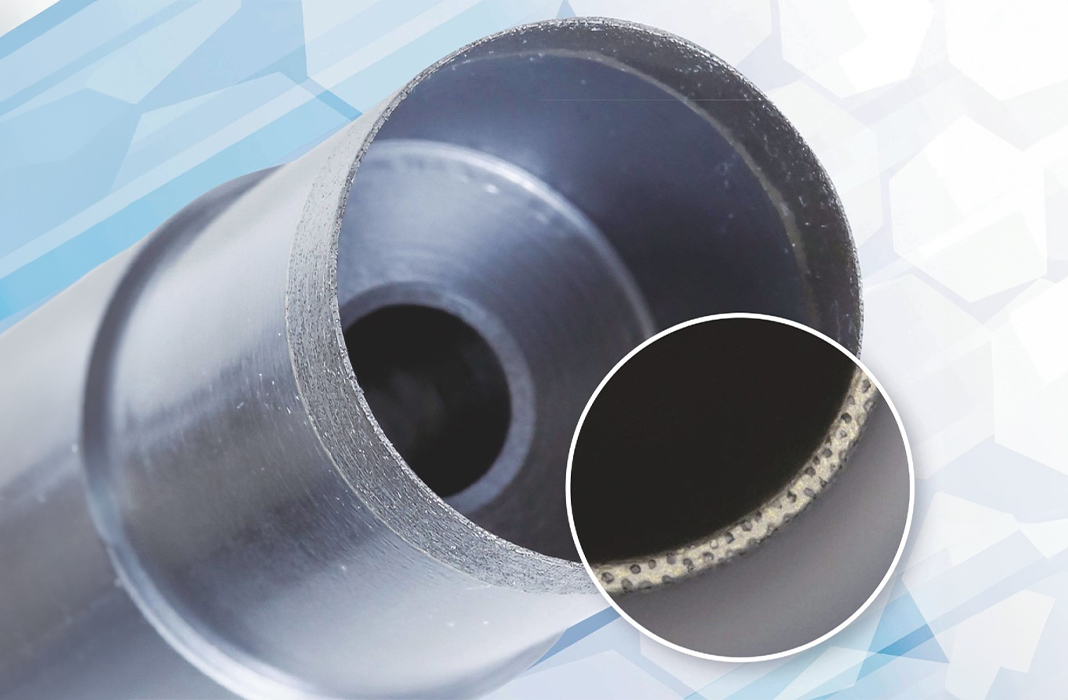
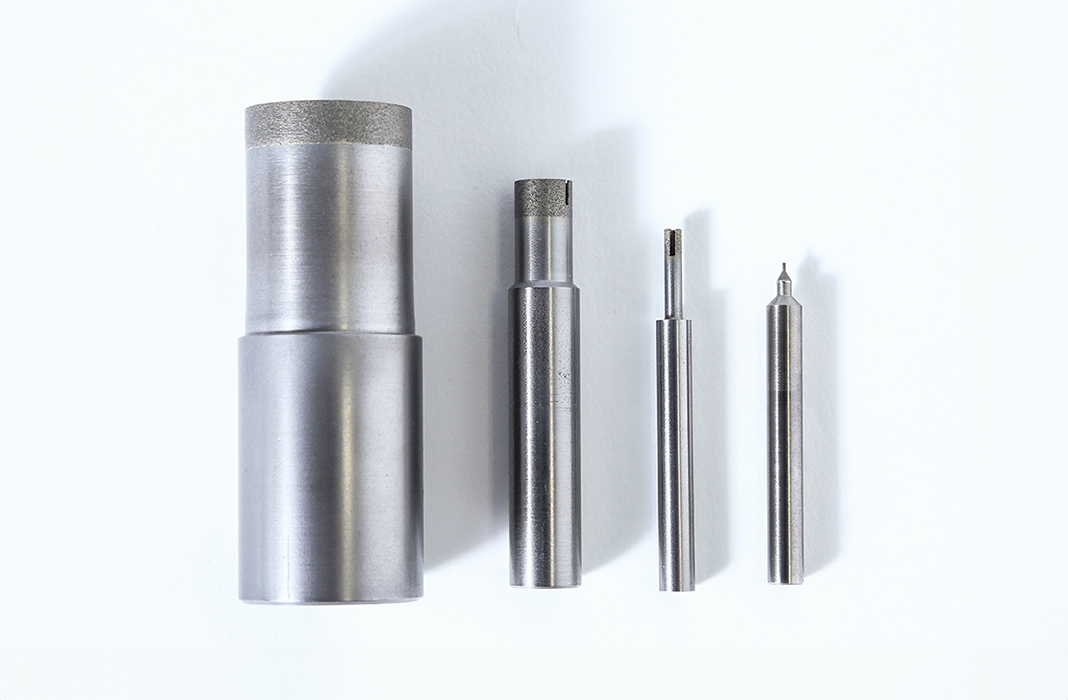
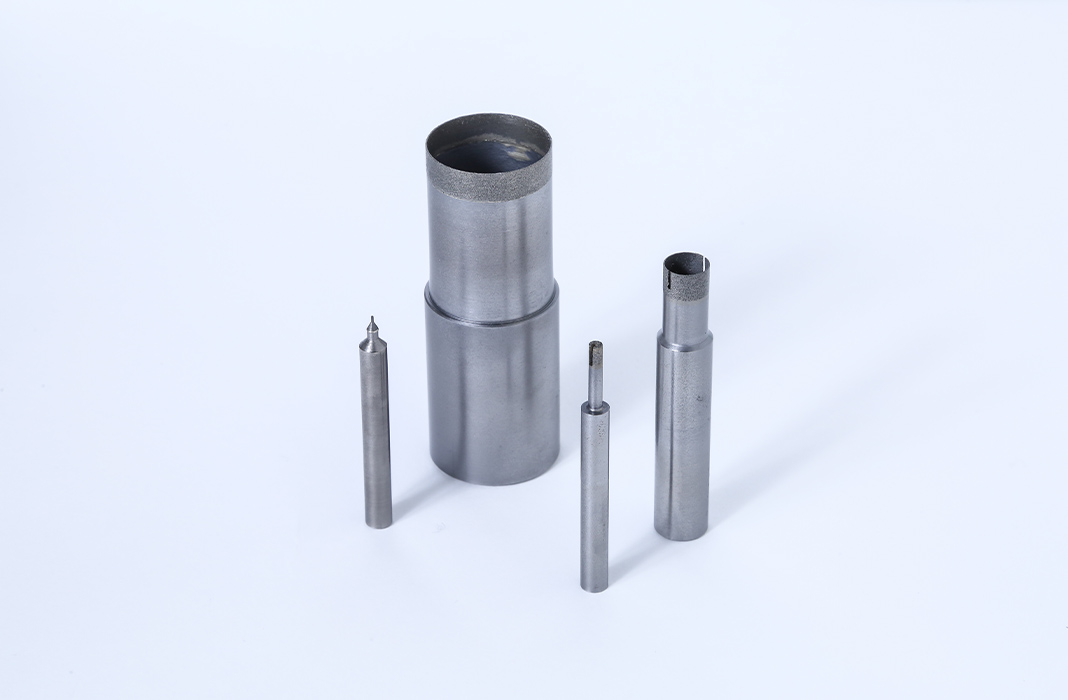
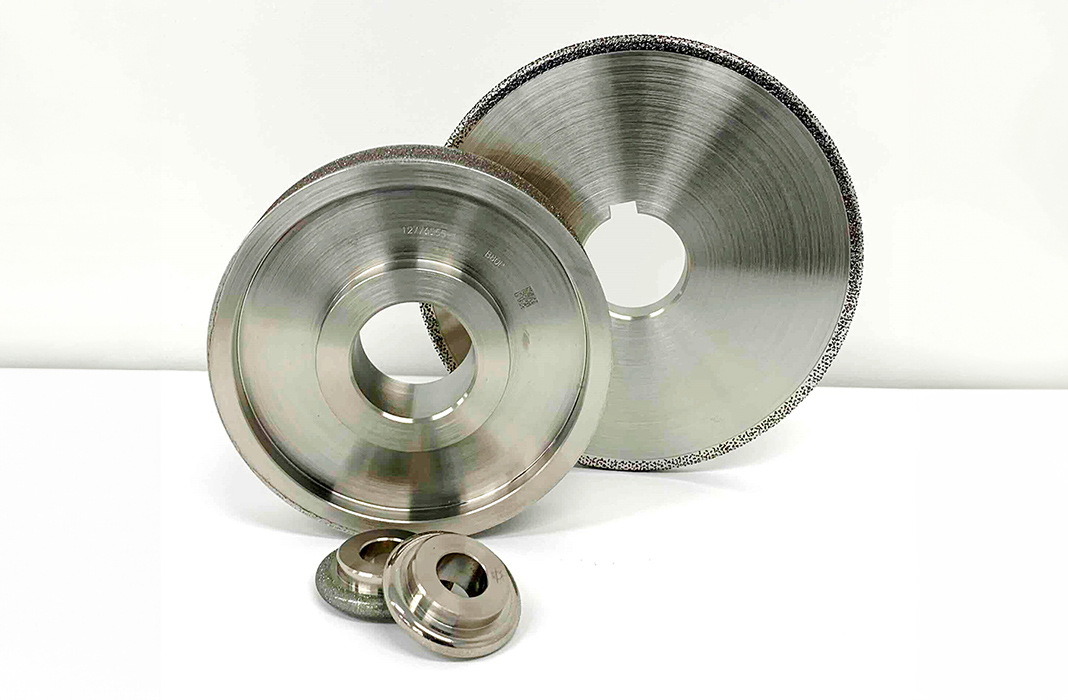
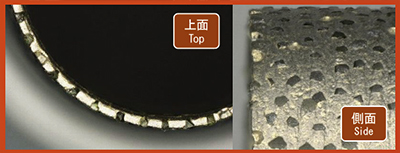
Ultra-thin-blade core drill with uniformly dispersed abrasive grains
In the machining of precision parts and mechanical components made from materials such as ceramics, a technology that uniformly disperses the abrasive grains within the abrasive layer has made it possible to improve cutting performance while extending tool life compared to conventional metal tools.
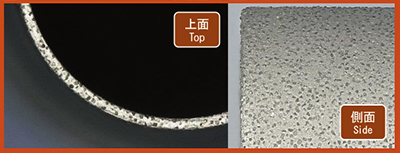
Furthermore, by making the abrasive layer ultra-thin, these tools reduce machining load and minimize chipping—even when machining hard and brittle materials and other specialty materials—thereby improving machining efficiency and demonstrating superior performance compared to other tools.
Application
- Grinding and coring of various ceramics, sapphire, quartz glass, GaN, silicon, MMC, and other hard and brittle materials
Types of Adhesives
- Metal
Product Features
The uniform dispersion of abrasive grains results in a longer service life, sharper cutting performance, and reduced chipping compared to conventional metal wheels.
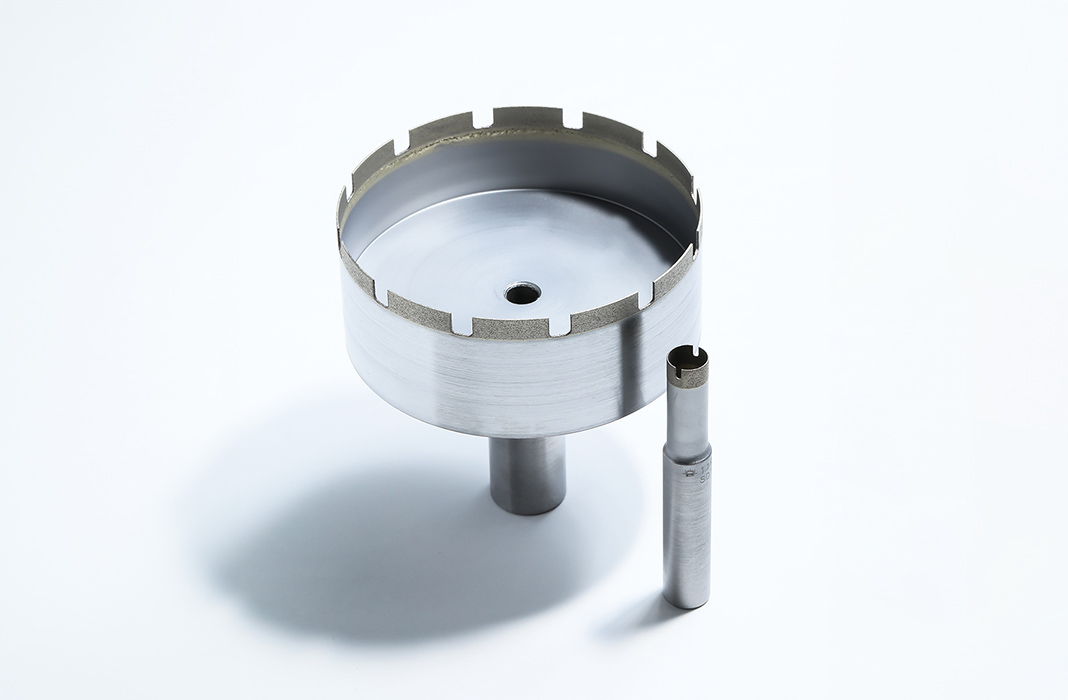
Can be used for a variety of machining methods, including core drilling, counterboring, and hole drilling.
| Grit: #30–#400– (*#1000) *Please consult us regarding grit sizes finer than #1000. | Various ceramic materials (silicon nitride, SiC, zirconia, etc.) |
| Outer diameter: φ1.0–φ100 | Semiconductor materials (GaN, sapphire, glass, etc.) |
| Blade thickness: 0.3 mm and up | Other (MMC, metal-based materials, CFRP, etc.) |
Machining Case Study: Countersinking of Polycrystalline SiC
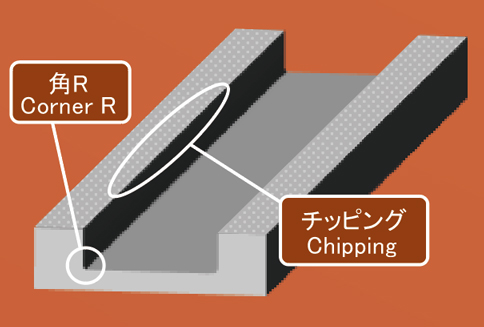
SOLOTERU® has good shape at workpiece corners and can suppress surface chipping
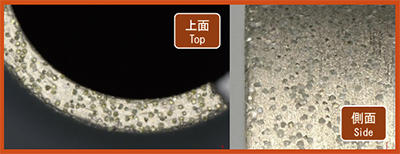
| Conventional Metal: #100—Blade Thickness 1.0 mm T | ||||
| SOLOTERU®: #100 - blade thickness 0.5mmT | ||||
| SOLOTERU®: #140 - blade thickness 0.5mmT |
*Relative value, with the load during conventional metal machining set as 100
Measurement Points
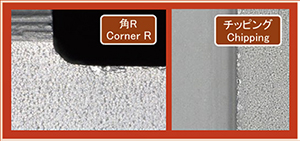 | 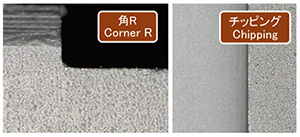 | 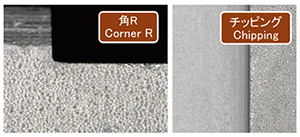 |
Comparison with Conventional Metal
 | 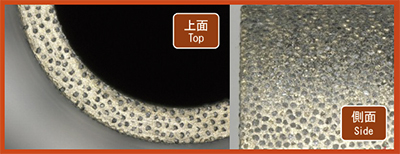 |
Example of thin-blade SOLOTERU®
 |  |
Applications of Tool Shapes
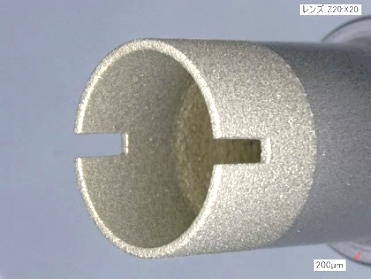 |
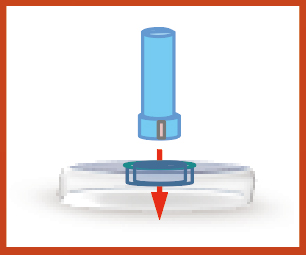 Core Drilling |
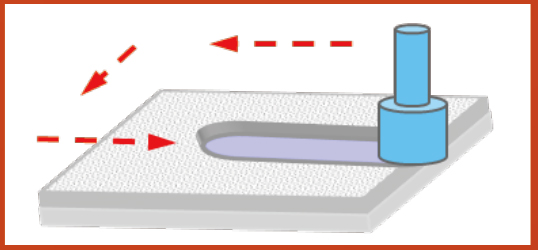 Countersinking |
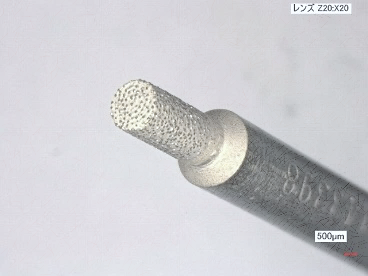 |
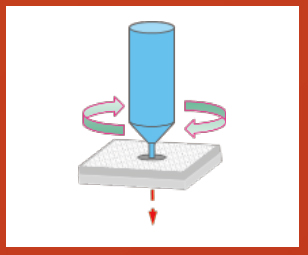 Drilling (contour drilling, helical drilling, etc.) |
Si Wafer Trimming (Perimeter Step-Down) Processing
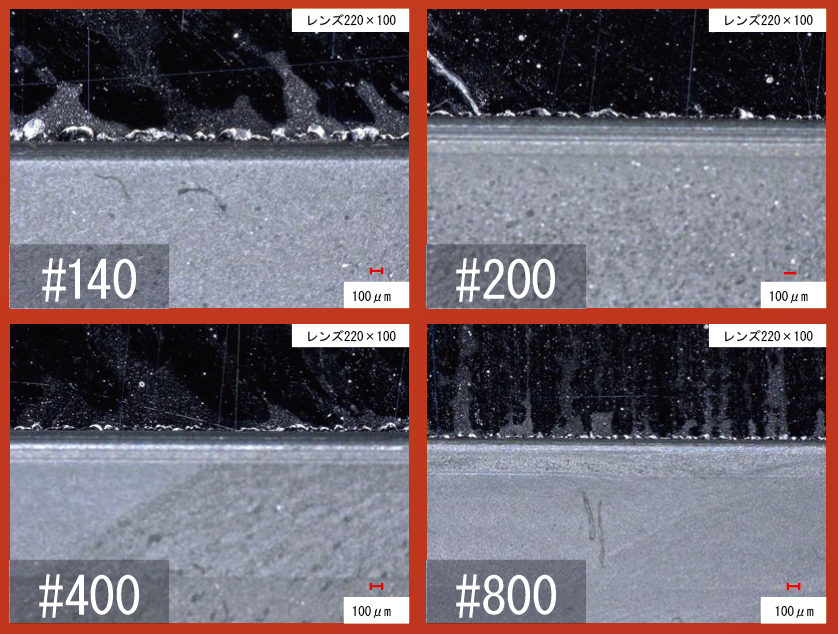
The size of the chips is proportional to the abrasive grain size.
Chipping was reduced to 70 μm or less using #400 grit.
Tool Specifications: Outer Diameter φ10, Blade Thickness 0.5 mm T
Workpiece: Si Wafer
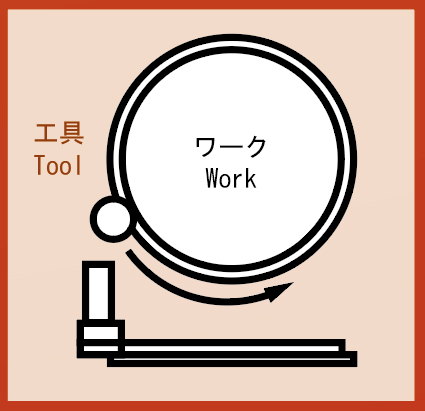
Cropping
*#140 - Relative value when the load is 100 when processed with SOLOTERU®
Chipping Condition
Related products